
SIP Calculator
What is an SIP Calculator? A Beginner’s Guide to Building Wealth
If you are new to the world of investing, you have likely heard the term “SIP” mentioned by friends, colleagues, or on social media. But what does it actually mean for your bank account?
A SIP Calculator is a simple yet powerful digital tool that helps you estimate the future value of your monthly investments. Instead of guessing how much you’ll have in ten years, you plug in three simple numbers:
- Monthly Investment Amount: How much you can save each month.
- Expected Rate of Return: The percentage growth you expect (usually based on historical mutual fund performance).
- Time Period: How many years you plan to stay invested.
At Nemi Wealth, we see many beginners get overwhelmed by complex financial jargon. Think of the Monthly Investment Calculator as your financial GPS—it shows you the destination before you even start the engine.
The Magic Behind the Numbers: The SIP Formula
You don’t need to be a math genius to build wealth, but knowing how the “machine” works helps. The SIP Formula used by these calculators is:
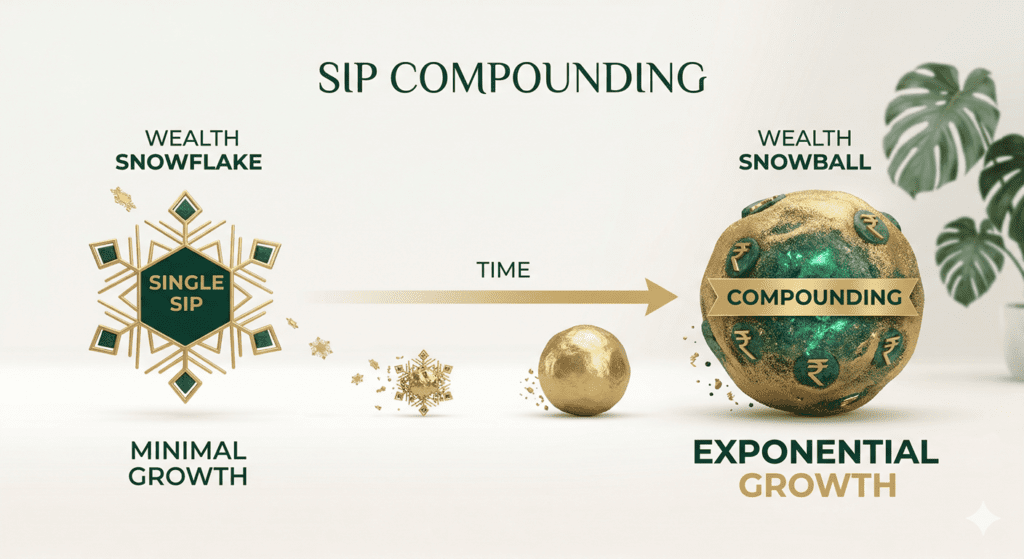
While that looks intimidating, it represents one thing: The Compounding Effect in SIP. Compounding is essentially “interest on interest.” Over time, your money doesn’t just grow; the growth itself starts growing. This is why starting early—even with a small amount—is the smartest move a beginner can make.
1. Step-up SIP Calculator: The Secret to Reaching Goals Faster
Most beginners start with a small SIP, perhaps ₹5,000 or ₹10,000. But as your salary increases every year, your investment should too.
A Step-up SIP Calculator shows you what happens when you increase your monthly investment by just 10% every year.
- Regular SIP: ₹10,000 for 20 years at 12% = ₹99 Lakhs
- Step-up SIP (10% annual increase): = ₹2.03 Crores
By simply adding a small “step-up” each year, you more than double your final wealth.
2. SIP Calculator with Inflation: The “Real” Value
A common mistake for beginners is aiming for a “round number” like 1 Crore. However, ₹1 Crore today will buy much less 15 years from now. A SIP Calculator with Inflation adjusts your final goal to show you what that money will actually be worth in the future.
If inflation is at 6%, your 1 Crore goal in 20 years will feel more like ₹31 Lakhs in today’s value. This is why professional guidance is vital—we help you set goals that actually cover your future costs.
Want to learn more?
Join the Finanshull community on Instagram and YouTube! We share daily videos that make investing easy, fun, and jargon-free for beginners. [Click here to follow Finanshull]
3. Lumpsum vs SIP Calculator: Which One is Better?
If you have a sudden windfall (like a bonus or a gift), you might wonder: Should I put it all in at once or spread it out?
A Lumpsum vs SIP Calculator helps you compare.
- SIP (Systematic Investment Plan): Best for regular earners. It reduces risk by buying more units when prices are low and fewer when prices are high (Rupee Cost Averaging).
- Lumpsum: Potentially higher returns if the market goes straight up, but much riskier for a beginner if the market drops the next day.
4. SIP Calculator for 1 Crore: Is it Possible for You?
Can a regular person become a “Crorepati”? Absolutely. Using a SIP Calculator for 1 Crore, we can see the path:
- To reach 1 Crore in 15 years (at 12% return), you need to invest approx ₹20,000/month.
- To reach 1 Crore in 20 years, you only need approx ₹10,000/month.
The longer you wait, the more “expensive” the goal becomes. This is the Expected Rate of Return for Mutual Funds working in your favor over time.
Why You Need a “Wealth Coach” (The Advice Filter)
It is easy to use a calculator, but it is hard to manage a portfolio. At Nemi Wealth, we believe beginners deserve the same professional quality as experts. Here’s why a tool isn’t enough:
- Choosing the Right Funds: The calculator doesn’t tell you which fund to buy. We select funds that match your risk level.
- Market Volatility: When the market goes down, most beginners panic and stop their SIPs. We provide the emotional support and data to keep you invested.
- Tax Planning: Did you know you have to pay tax on your gains? We help you plan your withdrawals so you keep more of your hard-earned money.
Conclusion: Stop Calculating, Start Investing
A SIP Calculator is a wonderful way to dream, but dreams only come true when you take action. Whether you want to save for a house, your child’s education, or your own retirement, the best time to start was yesterday. The second best time is today.
At Nemi Wealth, we take the guesswork out of your journey. We don’t just give you a calculator; we give you a roadmap and a partner to walk with you.
Book a Free Consultation at NemiWealth.com to Start Your 1 Crore Journey Today!
Frequently Asked Questions (FAQs)
What is the minimum amount I can start with in an SIP?
Most mutual funds allow you to start an SIP with as little as ₹500 per month. Use our Monthly Investment Calculator to see how even small amounts grow over 20 years.
Can I stop my SIP at any time?
Yes! One of the best things about SIPs is their flexibility. You can pause, stop, or increase your investment whenever you want without any heavy penalties.
What is a safe Expected Rate of Return for Mutual Funds?
For long-term equity investments (7+ years), most experts suggest using 10% to 12% in your calculator. While markets can go higher, it’s better to be pleasantly surprised than disappointed.
Does the SIP Calculator include taxes?
Most basic calculators do not. In India, Long-Term Capital Gains (LTCG) over ₹1.25 Lakh are taxed at 12.5% (as of 2024-25). This is why talking to a professional at Nemi Wealth is important for real-world planning.
Is SIP better than a Fixed Deposit (FD)?
Historically, equity SIPs have outperformed FDs over long periods. While FDs offer guaranteed returns, SIPs in mutual funds offer the potential for much higher wealth creation through the Compounding Effect in SIP.
How do I reach 1 Crore the fastest?
The fastest way is to use a Step-up SIP Calculator. By increasing your investment by 10-15% every year as your income grows, you can shave years off your timeline.