
Understanding Portfolio Overlap in Mutual Funds: A Guide for Indian Investors
Introduction to Mutual Funds and Portfolio Overlap
Mutual funds have gained immense popularity among Indian investors in recent years, primarily due to their ability to provide a diversified investment option in a simplified manner. These investment vehicles pool money from multiple investors to purchase a variety of securities, such as stocks, bonds, or other assets, managed by professional fund managers. The appeal of mutual funds lies in their ease of access, potential for growth, and the diversification they offer, allowing investors to spread their risk across various asset classes.
As more individuals turn to mutual funds as a viable investment option, it is crucial for them to understand the concept of portfolio overlap. Portfolio overlap occurs when investors unintentionally buy multiple mutual funds that invest in the same or similar stocks. This can lead to concentrated exposure to certain securities, which may negate the risks that diversification intends to mitigate.
For instance, an investor may hold several equity mutual funds that predominantly invest in large-cap companies like Reliance Industries or Tata Consultancy Services. Despite diversifying through different fund schemes, the overlapping stocks create redundancy in the investment strategy, potentially increasing risk rather than dispersing it. Such dichotomies may hinder performance, as the investor’s portfolio might be more correlated to market fluctuations than anticipated.
Understanding portfolio overlap is vital for anyone looking to manage their investments more effectively. By being aware of the extent to which their mutual fund selections may overlap, investors can make more informed decisions, leading to stronger risk management and overall portfolio performance. In navigating the complex world of investments, recognizing and addressing portfolio overlap is an essential component of a sound investment strategy.
How Portfolio Overlap Happens
Portfolio overlap is a common occurrence among beginner investors in the Indian mutual fund market, primarily stemming from a lack of comprehensive research and understanding. Many individuals, eager to diversify their investments, tend to purchase multiple mutual funds without considering the underlying asset allocation and stock holdings of each fund. This leads to situations where different funds may end up investing in the same set of stocks, creating a higher concentration in specific equities rather than true diversification.
Furthermore, the investment strategies employed by various fund managers often exhibit significant similarities. For instance, two or more funds might focus on large-cap growth stocks, leading to overlapping investments in the same companies. These similar investment styles can result from adherence to common benchmarks or methodology, further exacerbating the potential for portfolio overlap. When investors are unaware of these strategies or overlook the holdings of each fund, they may inadvertently create a portfolio that does not effectively diversify risk.
It is also a common misconception that purchasing multiple funds inherently guarantees a well-diversified portfolio. This belief can lead to an overestimation of diversification benefits, as the core holdings may not differ significantly among the selected funds. Such misunderstandings highlight the importance of conducting thorough research into the funds being considered, including understanding their respective investment objectives, stock selections, and overall market trends. By recognizing how portfolio overlap occurs and the factors contributing to it, investors can make more informed decisions that align with their financial goals and asset allocation strategies.
The Risks of Portfolio Overlap
Portfolio overlap occurs when an investor holds multiple mutual funds or investment vehicles that contain the same underlying assets. While diversification is typically seen as a strategy to mitigate risk, excessive overlap can lead to concentrated risks instead. This scenario arises when various funds invest heavily in identical sectors, stocks, or other investment opportunities, creating a false sense of security.
One significant risk associated with portfolio overlap is the amplification of losses during market downturns. When investors are heavily concentrated in specific assets, a decline in the value of those investments can lead to significant financial losses. In volatile market conditions, funds with overlapping holdings may not provide the anticipated defensive qualities that one would expect from diversification. Instead, they may exhibit correlated declines, severely impacting the portfolio’s overall performance.
Furthermore, concentrated risks might hinder an investor’s ability to benefit from market recoveries. If the overlapping assets do not rebound in value, the recovery of the investor’s total portfolio is at risk. This lack of adequate diversification can be particularly damaging in uncertain economic environments where market conditions fluctuate rapidly, leading to unpredictable investment returns.
Moreover, when an investor distributes their investments across numerous funds, the potential exists for not just overlap but also for a loss of unique investment opportunities. By concentrating on similar assets, investors may overlook other promising opportunities that could lead to enhanced returns. In essence, managing portfolio overlap is crucial for safeguarding against concentrated risks and ensuring that an investor’s strategy aligns with their financial goals.
Recognizing the Signs of Portfolio Overlap
Investing in mutual funds provides diversification; however, investors must remain vigilant about portfolio overlap, which can dilute the benefits of diversification. One of the primary signs of overlap is holding multiple funds that feature the same top ten holdings. For instance, if two or more funds in an investor’s portfolio consistently invest in the same large-cap companies, it can lead to unintended concentration in a specific sector or stock.
Another indication of overlap is the presence of funds concentrated in similar sectors. Investors may unknowingly invest in various funds that all focus on technology or healthcare, which can create a situation where the portfolio is not as diversified as intended. Monitoring sector exposure can help in identifying potential overlaps that may expose the investor to heightened risk if those sectors underperform.
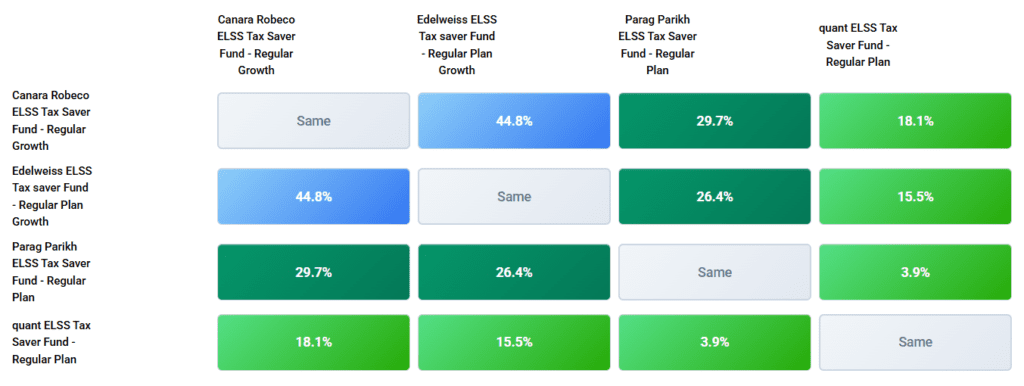
Investors can utilize various tools and resources to analyze their mutual fund portfolios for overlaps. Online platforms, such as mutual fund analysis software, allow users to input their portfolio details and assess the degree of overlap across different funds. Many financial websites offer tools that provide a detailed breakdown of fund holdings, enabling investors to easily compare top holdings, sector allocations, and geographic exposure. Additionally, some investment management firms provide portfolio analysis services, which can highlight potential overlaps and aid in making informed adjustments.
Regular portfolio reviews are also essential in maintaining an optimized investment strategy. By systematically evaluating fund performance and holdings, investors can ensure that they are staying aligned with their financial goals while avoiding potential pitfalls posed by excessive overlap.
Illustrating Portfolio Overlap with Examples
To understand how portfolio overlap manifests in mutual funds, let us consider two hypothetical mutual funds: Fund A and Fund B. Both funds are launched to provide investors with exposure to the Indian equity market, particularly targeting large-cap companies.
Assume Fund A has a significant allocation to the following stocks: Reliance Industries, Tata Consultancy Services (TCS), and Infosys. Fund A’s investment strategy emphasizes growth potential and established companies, resulting in these core holdings. Fund B, meanwhile, is designed to focus on blue-chip stocks, and it also invests heavily in Reliance Industries, TCS, and Infosys, mirroring some of the top positions held by Fund A.
This overlap can lead to redundancy, meaning that an investor in both funds is not gaining as much diversification as they might believe. If the Indian stock market sees a downturn, the performance of these funds could be similarly affected due to their common holdings. An investor holding both Fund A and Fund B would only have a disproportionate exposure to the same companies, thus reducing the effective diversification that these different funds are purported to offer.
To further illustrate, let’s say Fund A holds 10% in Reliance Industries, while Fund B also allocates 10% to the same stock. If Reliance’s stock price declines by 5%, both funds will experience a similar decrease in net value, leading to a compounded effect on the investor’s overall return.
In this situation, investors might mistakenly think they have adequately diversified their portfolios. However, a deeper analysis would reveal that both funds react similarly to market movements, underscoring the importance of recognizing portfolio overlap. Hence, it becomes crucial for investors to carefully examine their mutual fund investments to ensure they aren’t unintentionally concentrating their risks within a limited number of companies.
The Importance of Diversification in Mutual Funds
Diversification is a fundamental principle in investing that plays a crucial role in reducing risk. In the context of mutual funds, it involves spreading investments across a variety of sectors and asset classes to minimize exposure to any single economic event. A well-diversified mutual fund portfolio can be akin to an insurance policy against market volatility, helping to cushion potential losses during downturns.
Investors often face the challenge of navigating fluctuating markets. By ensuring that their mutual fund investments are diversified, they can mitigate the negative impact of sector-specific downturns. For instance, if an investor’s portfolio is heavily weighted towards the technology sector and a downturn occurs in that sector, they could experience significant losses. However, a balanced portfolio that includes investments in sectors like utilities, healthcare, and consumer goods can help offset those losses, as these sectors may perform better under certain market conditions.
Furthermore, diversification can extend beyond just sector representation; it can also involve varying asset classes. A mutual fund that includes equities, bonds, and commodities can provide better stability against market fluctuations. Each asset class responds differently to economic changes, and a varied investment strategy helps in smoothing out the overall portfolio performance.
In summary, for Indian investors, understanding the importance of diversification in mutual funds is essential for effective risk management. By investing in a portfolio that adequately mirrors different sectors and asset classes, individuals can protect their investments from market unpredictability and achieve more consistent returns over the long term. This strategic approach serves to enhance overall investment resilience, making it a critical component of a successful investment strategy.
How to Avoid Portfolio Overlap
Investors keen on growing their wealth often turn to mutual funds as an effective investment vehicle. However, a common pitfall is portfolio overlap, which occurs when multiple funds hold similar securities, potentially diminishing the benefits of diversification. To navigate this issue, Indian investors can adopt several strategies to ensure that their mutual fund selections complement rather than duplicate one another.
First and foremost, thorough research is imperative. Before investing in any mutual fund, investors should examine the fund’s holdings and assess how they align with other investments in their portfolio. Each fund may present an intersection of stocks or bonds, leading to unnecessary overlap. Reviewing the portfolio composition helps identify whether a fund brings unique value or merely replicates existing positions.
Additionally, investors should utilize portfolio analysis tools available through various financial websites and platforms. These tools can help visualize the entire portfolio’s exposure, highlighting areas of overlap that may not be immediately apparent. Many platforms enable users to input their holdings, providing insights into overall asset allocation and specific security duplications across funds.
Consulting with a financial advisor can also provide invaluable guidance. Professional advisors can offer tailored advice based on an investor’s financial goals and risk tolerance. They can help identify potential overlaps and suggest adjustments to create a more balanced and diversified portfolio approach. Financial advisors can incorporate their expertise to evaluate funds more critically, ensuring that investors make informed decisions.
By implementing these strategies—thorough research, utilizing analytical tools, and seeking professional advice—investors can significantly reduce the risk of portfolio overlap in their mutual fund investments. This approach fosters a well-rounded investment strategy capable of addressing market variations effectively.
Visualizing Your Portfolio: The Role of Technology
In the rapidly evolving investment landscape, technology plays a pivotal role in empowering investors, particularly in the realm of mutual funds. For Indian investors, several technology solutions and applications cater specifically to the need for visualizing mutual fund portfolios and detecting overlaps. These tools are designed to facilitate a deeper understanding of the portfolio’s composition and its alignment with individual investment goals.
One notable category of tools includes portfolio management applications that offer comprehensive visuals of asset allocation. These applications allow investors to see a graphical representation of their investments across various mutual funds, highlighting areas of redundancy where overlapping holdings may exist. By clearly illustrating these overlaps, technology enables investors to make informed decisions regarding fund selections and necessary adjustments. For instance, if an investor holds mutual funds from different fund houses that invest in the same underlying stocks, these tools can alert them, helping to avoid concentration risk.
Furthermore, many of these applications incorporate advanced analytics, which not only visualize the portfolio but also assess its performance based on market trends. Features such as risk assessment tools and performance tracking enable users to evaluate how their entire mutual fund investment portfolio is structured relative to the market. This holistic view is invaluable for optimizing returns while managing risk.
Several apps available in India, such as Groww, Kuvera, and Paytm Money, have gained popularity for their user-friendly interfaces and robust analytics. By leveraging these technology solutions, investors can simplify the complexities of managing mutual fund portfolios, ensuring their investment strategies are sound and well-informed. Overall, embracing these technological advancements can lead to more effective portfolio management by enabling investors to visualize their holdings and better understand potential overlaps.
Click here for a FREE Portfolio Review.
Conclusion
In the realm of mutual funds, understanding portfolio overlap is crucial for optimizing investment performance. Portfolio overlap occurs when two or more funds in an investor’s portfolio hold significant portions of the same securities. This phenomenon can lead to unintended risk concentrations and reduced diversification, which are essential principles for sound investing.
Investors must recognize that high levels of overlap can dilute the intended benefits of diversification. When multiple funds invest in the same stocks, the impact of poor performance in those stocks is magnified, affecting the overall returns of the portfolio. Therefore, being aware of the extent of overlap is not just a matter of curiosity; it is integral to making informed investment decisions.
By regularly reviewing one’s mutual fund portfolio, investors can gauge the overlap among their holdings and make necessary adjustments to ensure a more balanced asset allocation. This practice becomes even more critical when contemplating the addition of new funds, as understanding existing overlaps informs better choices, aligning them with investment objectives.
In summary, conscious awareness and management of portfolio overlap empower investors to make strategic decisions, ultimately leading to improved financial outcomes. Taking the time to analyze portfolio compositions and their interrelationships enables investors to not only safeguard against undue risk but also enhance potential returns. Thus, a diligent investment approach, characterized by regular review and assessment, allows Indian investors to navigate the complexities of mutual funds successfully.